The Art of Cozy Spaces
The Psychology of Cozy—Why Texture Matters
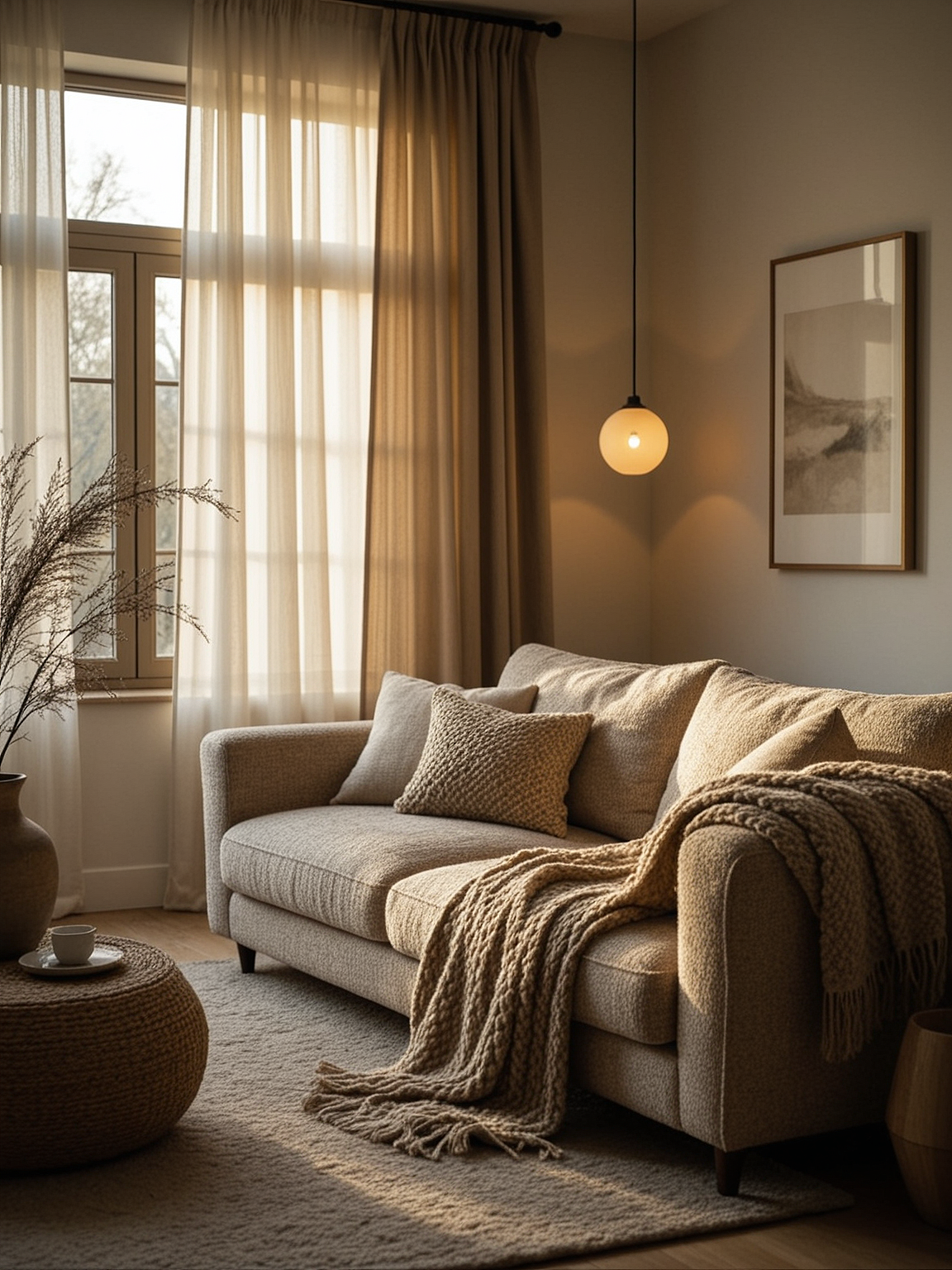
Cozy isn’t just an aesthetic—it’s a biological response. When we encounter soft textures, warm lighting, and enclosed spaces, our nervous systems downshift from sympathetic (fight or flight) to parasympathetic (rest and digest). This phenomenon, rooted in environmental psychology, explains why certain spaces make us exhale immediately upon entry.
The Research
A 2010 study published in the Journal of Consumer Research introduced the concept of “embodied cognition” in interior spaces—finding that physical textures influence emotional states. Participants who touched soft fabrics reported increased feelings of comfort and security compared to those handling hard surfaces. The implication: our homes aren’t just visual experiences; they’re tactile ones.
The Danish Example
The word “hygge” (pronounced hoo-gah) entered global design vocabulary in the mid-2010s, but the concept predates the trend by centuries. Rooted in 16th-century Norwegian, it described a mood of coziness, contentment, and well-being. The Danish cultural embrace of hygge correlates with Denmark consistently ranking among the world’s happiest countries in the UN World Happiness Report—suggesting environmental coziness may contribute to collective well-being.
The Texture Hierarchy
- 🍁 Base layers: Hard surfaces (wood, stone, metal) provide structure
- 🍁 Mid layers: Natural fibers (linen, cotton, wool) add softness
- 🍁 Accent layers: Plush textures (velvet, bouclé, shearling) create focal points
Material Intelligence—Choosing Textures That Last
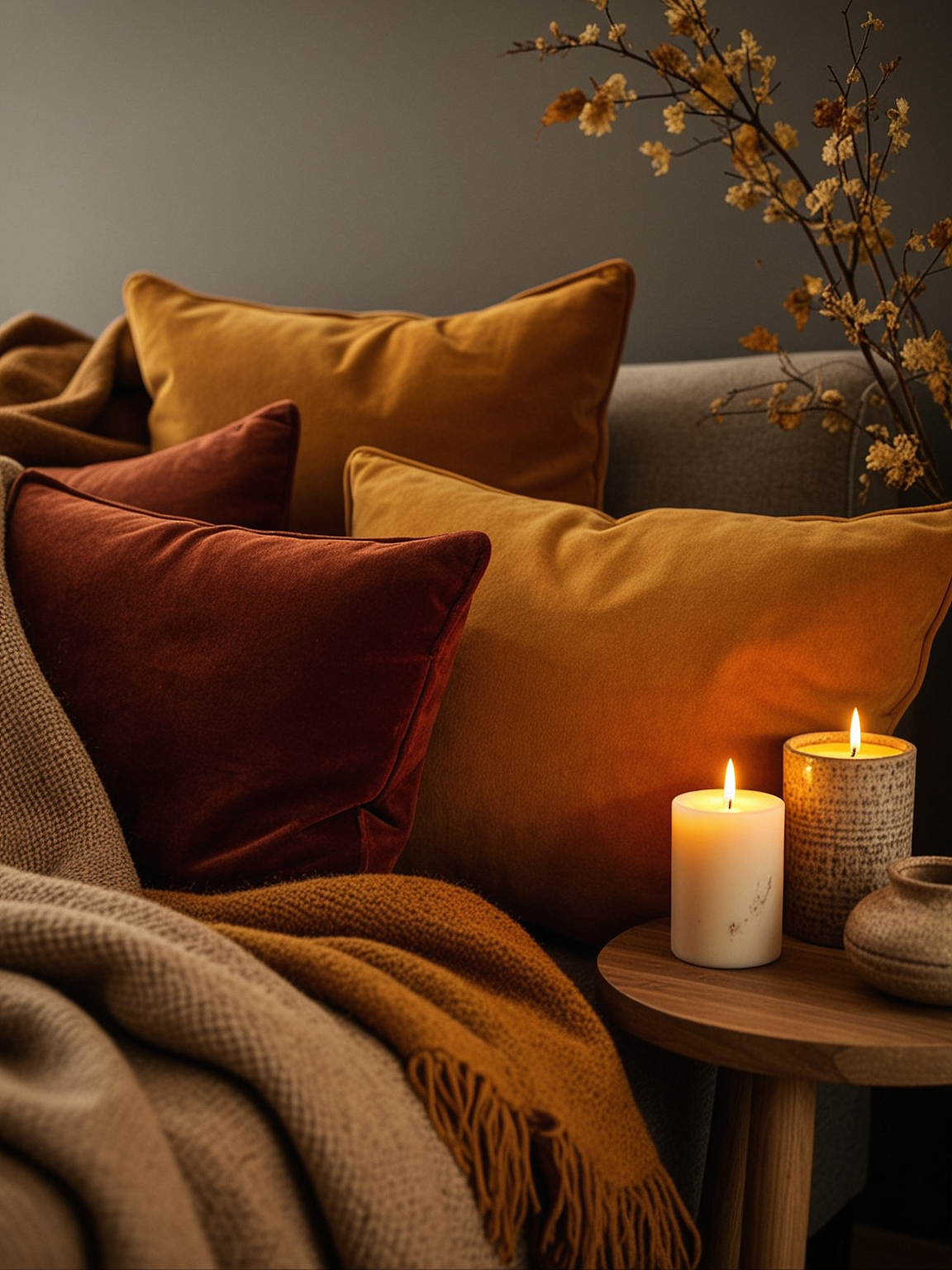
Not all cozy materials are created equal. The trend toward “cozy minimalism” prioritizes natural fibers that age gracefully and maintain their tactile appeal over time.
- 🌾 Wool: The original performance fabric. Wool fibers can absorb up to 30% of their weight in moisture without feeling wet, making them ideal for throws and blankets. Merino wool, with fibers finer than 24 microns, offers softness comparable to cashmere without the high maintenance. The Woolmark Company, which certifies wool quality, notes that wool’s natural crimp creates insulating air pockets—explaining its warmth despite lightweight feel.
- 🌾 Linen: Made from flax fibers, linen is 30% stronger than cotton and becomes softer with each wash. Its natural slubbed texture and tendency to wrinkle—once considered flaws—are now prized for their organic, lived-in aesthetic. Belgian and French linen, produced from specific flax varieties grown in optimal climate conditions, remain the industry standard.
- 🌾 Bouclé: This nubby fabric, whose name derives from the French word for “curled,” features looped yarns that create dimensional texture. Popularized in mid-century modern design (notably on Eero Saarinen’s 1948 “Womb Chair”), bouclé has experienced a renaissance in contemporary interiors for its visual warmth and tactile interest.
- 🌾 Velvet: Historically woven from silk, modern velvet uses cotton, linen, or synthetic fibers. The pile—upright fibers that create the fabric’s characteristic sheen—catches light differently throughout the day, adding dynamic visual interest. Cotton velvet offers durability; silk velvet provides luxury; synthetic velvet ensures affordability.
The Investment Approach
Quality natural fibers cost more initially but outlast synthetic alternatives. A wool throw properly cared for can last decades; a polyester fleece typically shows wear within two to three years.
The Lighting Layer—Creating Warmth Through Illumination
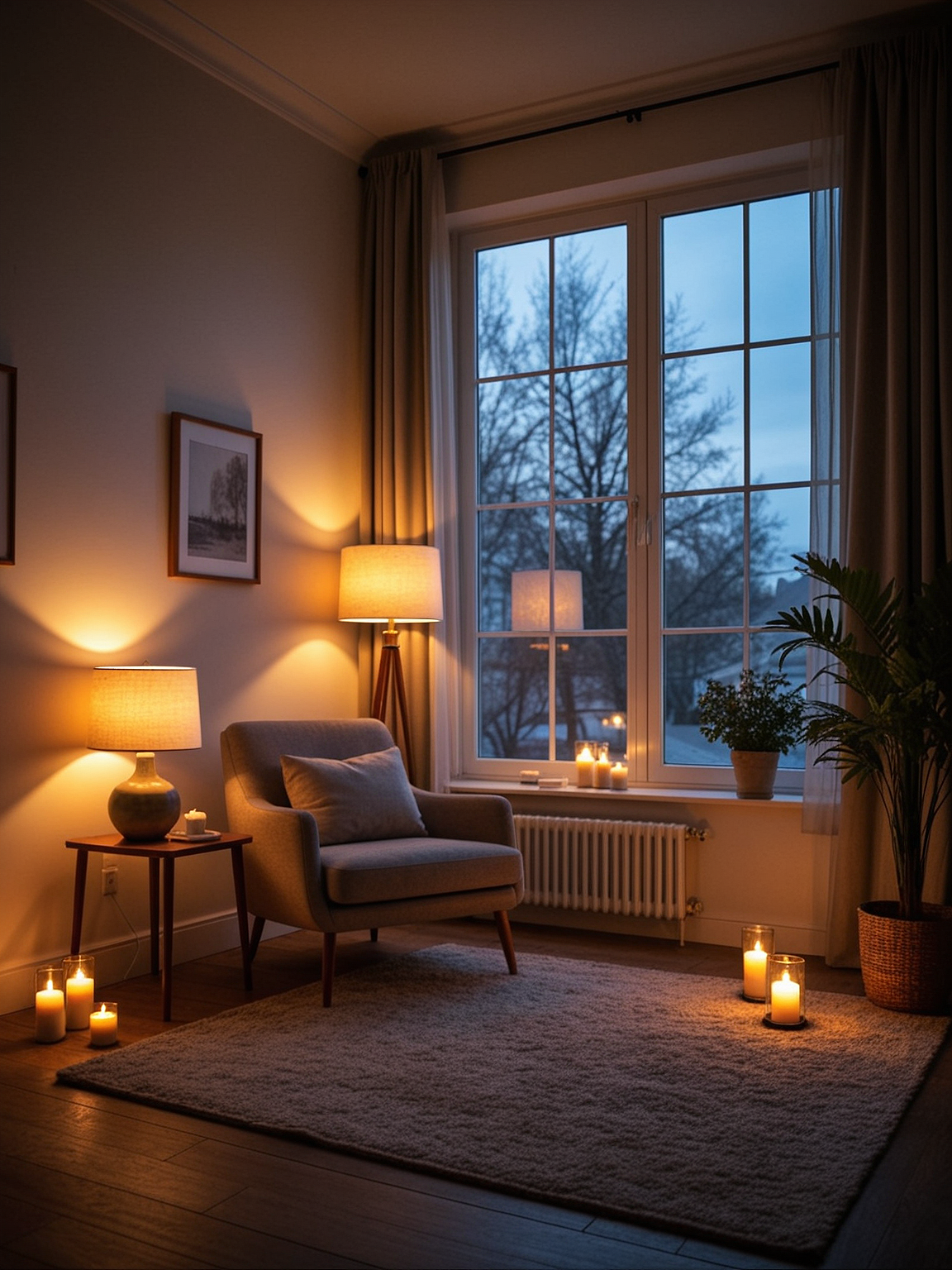
Lighting temperature is measured in Kelvin (K). Daylight registers around 5000-6500K (cool blue-white). Candlelight sits at approximately 1800-2700K (warm yellow-orange). The most inviting evening spaces use multiple light sources at 2700K or below.
The Three-Layer Lighting Method
- 🕯️ Ambient: Overall room illumination (ceiling fixtures, recessed lighting)
- 🕯️ Task: Focused light for specific activities (reading lamps, under-cabinet kitchen lighting)
- 🕯️ Accent: Decorative illumination highlighting features (picture lights, candles, uplighting)
Cozy spaces emphasize task and accent lighting while dimming ambient sources. The goal: pools of warm light against darker backgrounds, creating depth and intimacy.
The Candle Advantage
Beyond aesthetics, candlelight offers physiological benefits. Research published in Chronobiology International (2014) found that warm light sources in the evening support melatonin production, while cool blue light (from screens and daylight-mimicking LEDs) suppresses it. Beeswax candles, which burn cleaner than paraffin alternatives, emit a warm, golden light similar to sunset—signaling to our circadian rhythms that the day is ending.
Smart Lighting Strategy
Dimmable fixtures with warm-toned LED bulbs (2700K or lower) allow for adjustable ambiance. Philips Hue and similar systems can shift from energizing cool light during work hours to relaxing warm tones in the evening—supporting both productivity and rest.
The Golden Hour Effect
Maximize natural light during autumn’s brief golden hours (the period shortly before sunset). Unlined linen or sheer curtains diffuse harsh sunlight while maintaining connection to the shifting outdoor light—extending the sense of warmth as days shorten.
The Curated Cozy—Editing for Intention
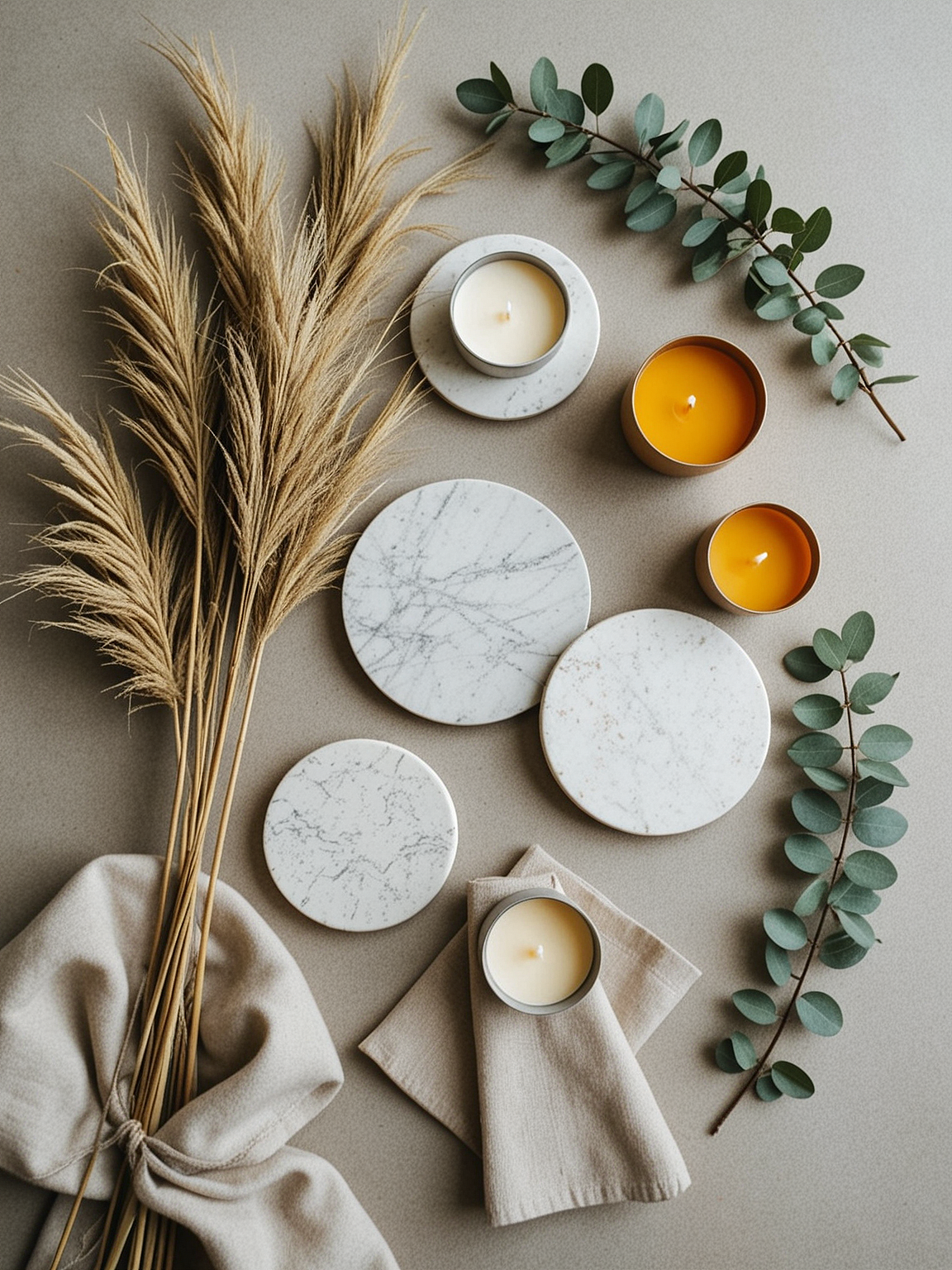
True coziness isn’t about accumulation—it’s about curation. The most inviting spaces practice restraint, displaying only objects that serve function or spark genuine joy.
The KonMari Connection
Marie Kondo’s 2014 book The Life-Changing Magic of Tidying Up introduced the concept of keeping only items that “spark joy.” Applied to cozy spaces, this means:
- • One quality throw blanket used daily over three decorative ones never touched
- • A single signature candle with a scent you love versus a collection of half-burned votives
- • Books you actually reread, not aspirational tomes gathering dust
The Wabi-Sabi Influence
Japanese aesthetics offer a corrective to Western perfectionism. Wabi-sabi finds beauty in imperfection, impermanence, and incompleteness. Applied to interiors: the patina on aged brass, the fade of sun-bleached linen, the asymmetry of hand-thrown ceramics. These “flaws” signal authenticity and time—qualities that enhance rather than diminish coziness.
Seasonal Rotation
The most functional cozy spaces evolve with the seasons. Summer storage might hold heavy woolens; winter closets house lightweight linens. This rotation prevents visual clutter while ensuring appropriate textures are accessible when needed.
The 80/20 Rule
Eighty percent of the time, we use twenty percent of our possessions. Identify your essential cozy items—the cashmere sweater you reach for constantly, the mug that feels perfect in your hands, the chair you always choose—and invest in their quality. Let the other 80% go.
| ← Previous Article | Next Article → |

